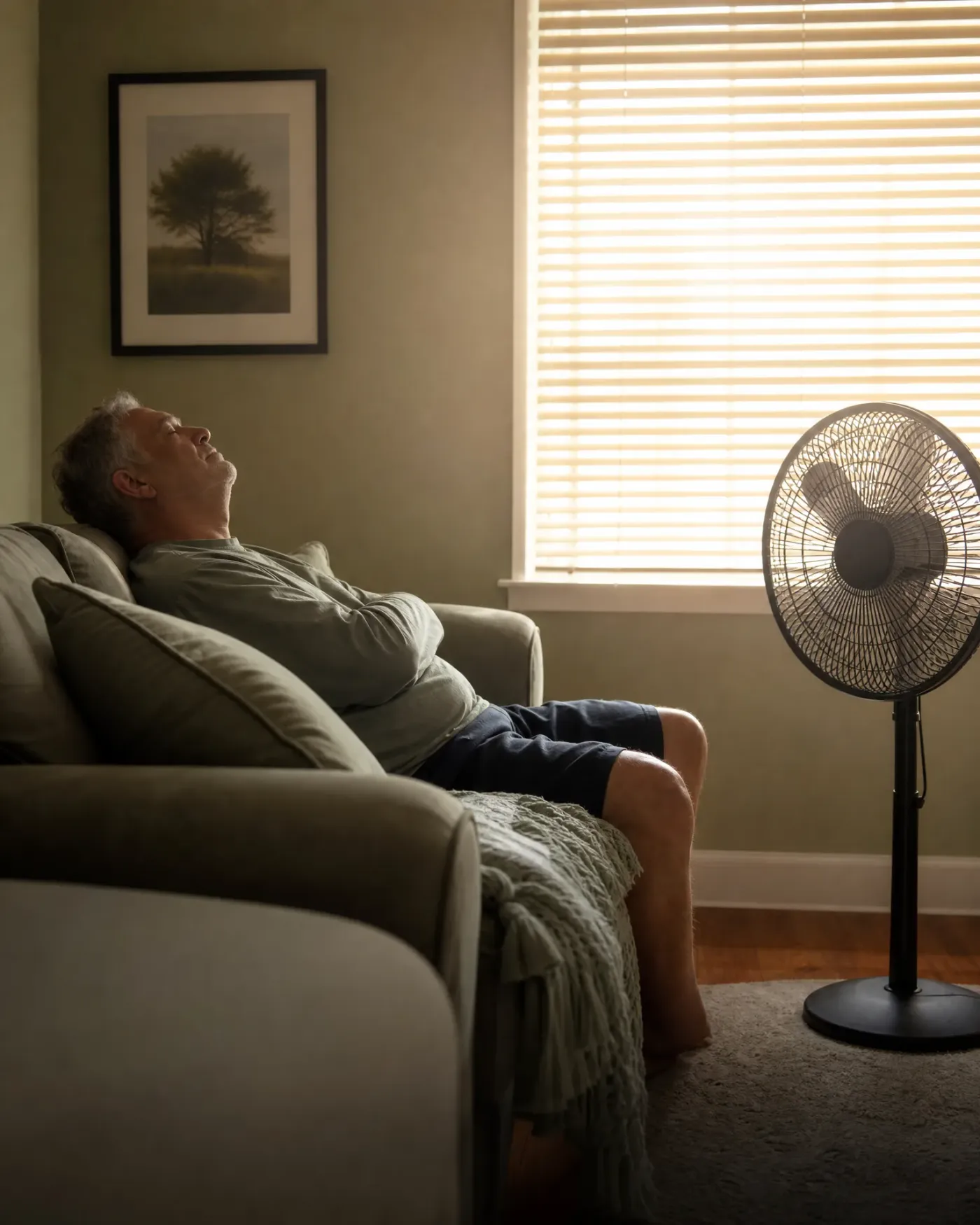
Running the way it should
The indicator panel glows steady, the vane is open, and air moves out warm. No clicking, no flashing light, no smell. If yours looks like this in the cold, the problem isn't the unit itself.
A mini split that won't turn on in cold weather is usually stuck in a defrost cycle or tripped on a safety switch, not actually broken. Once it drops near or below freezing outside, the outdoor unit ices up, and the system pauses to run a defrost cycle before it can push heat again. If it's stuck there, or if the breaker keeps tripping, or if the remote shows an error code and the indoor unit stays dark, something inside is actually failing: a frozen coil that isn't clearing, a bad sensor telling it the wrong temperature, or a compressor that won't start under load. Since most homes in West Virginia lean on electric heat, a mini split that quits in January isn't a minor inconvenience, it's your main source of warmth going out in the coldest stretch of the year. Worth checking the breaker and the remote's settings first, but if it still won't start, the unit needs a qualified eye before the next cold snap.
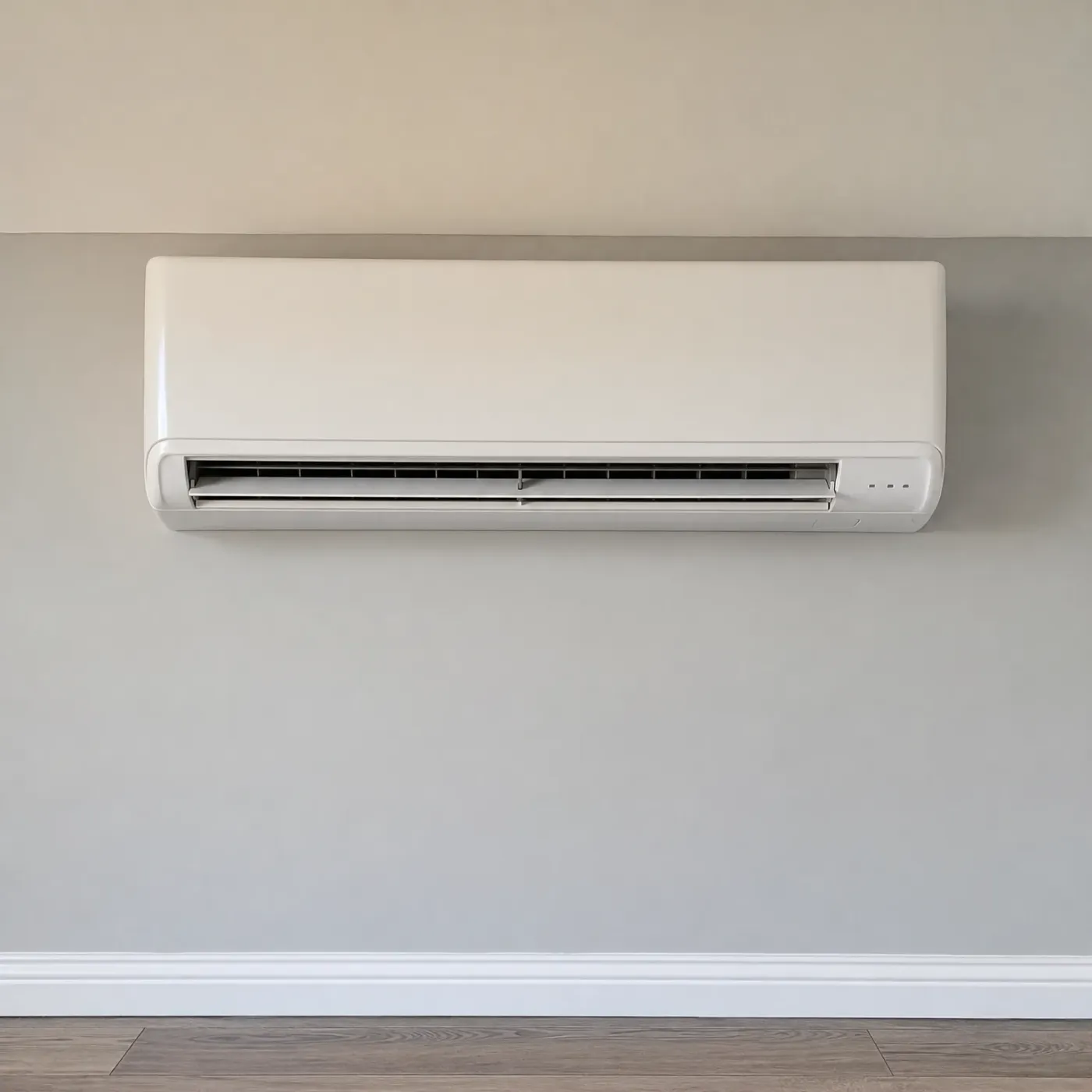
The indicator panel glows steady, the vane is open, and air moves out warm. No clicking, no flashing light, no smell. If yours looks like this in the cold, the problem isn't the unit itself.
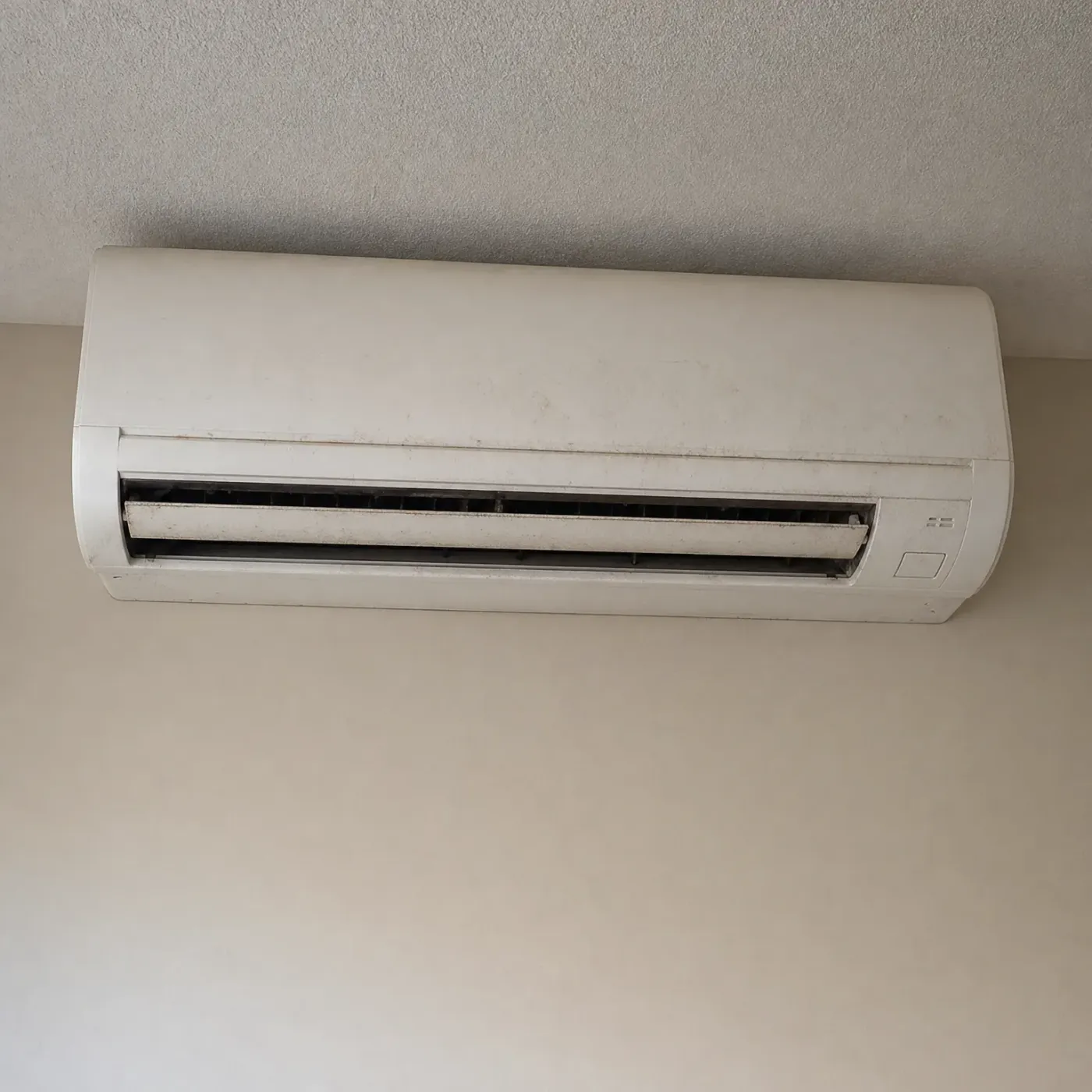
Built-up grime on the housing and a vane stuck half open point to a unit that hasn't been serviced in a while. A dirty coil behind that panel makes defrost cycles longer and ice harder to shed.
You went out to the outdoor unit and the indicator light is just blinking, over and over, and the system won't fire up. It's cold, the house is losing warmth, and you don't know if that blink means something small or something that's about to turn into an expensive repair. A blinking light on its own doesn't tell you much unless you know what it's counting.
Mini splits don't have a screen to tell you what's wrong, so they blink the indicator light in a pattern instead. A certain number of blinks, then a pause, then the same count again. That pattern maps to a specific fault in the unit's control board, things like a frozen sensor, a stuck drain float switch, or a communication error between the indoor and outdoor unit. Brands number these differently, so the same blink count means something different on a different system. A contractor who works on your brand all winter in West Virginia can read the count off the indoor unit and knows which fault it points to before taking the cover off, which narrows down the repair instead of guessing at it.
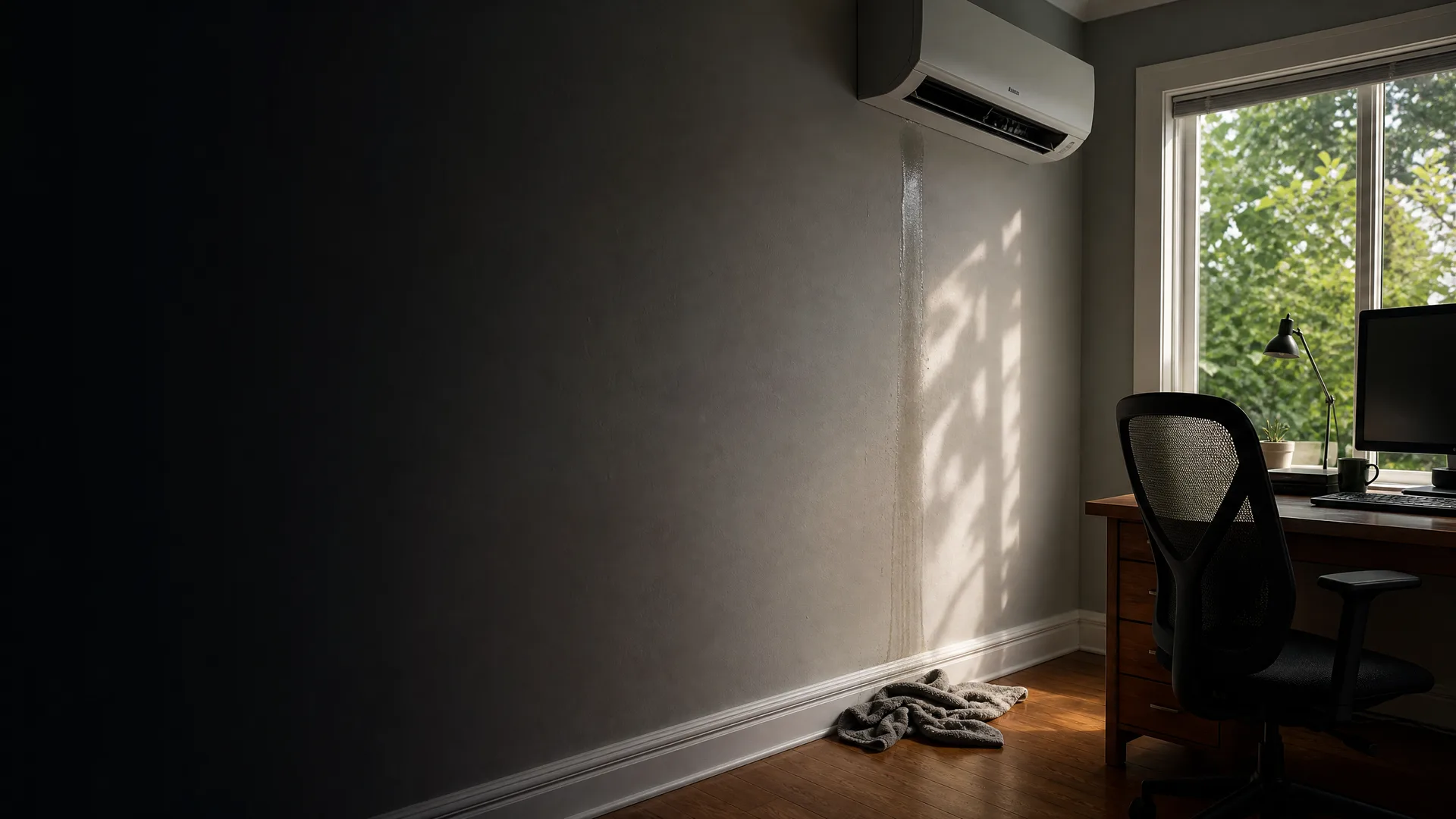
Wrong season for this, but it happened in January anyway. You'd had the mini split heating the office fine for a week, then went in Tuesday morning and found a wet streak down the wall under the indoor unit, running toward the outlet behind your desk. A towel was already soaked through on the floor where the drip had been landing overnight. You hadn't touched the thermostat setting since the cold snap started. Outside, the compressor was iced over at the base, and you weren't about to start pulling panels off a unit you didn't install, with the drain line somewhere behind a wall and a space heater as the only backup heat in that room. You wanted someone who already knew this system to come look at it once, not a list of names to call through.
Your request goes to one pro, not a list of companies.
No charge to send it. You decide if you hire them.
A mini split pulls heat out of outdoor air, and below freezing there's less of it to pull. Most units carry an auxiliary strip or rely on the compressor working harder to keep up, and some are only rated down to a certain outdoor temperature. Check the manual or the plate on the outdoor unit for that number. If West Virginia's nighttime lows are dropping past it, the system may be shutting itself off on purpose rather than failing to run.
Go to the panel before you call anyone. If the breaker for the outdoor unit has tripped, that's a draw of current past what the circuit allows, often from a compressor straining to start in the cold. Flip it back once. If it trips again within a few minutes, leave it off. A breaker that won't hold is telling you something electrical is wrong, and a contractor who works on these year-round will want to know that detail before showing up.




If the unit is only blinking or stuck mid-cycle, a West Virginia winter morning is the easiest time to blame it and the hardest time to be right about it. Check the obvious things: the breaker, the remote batteries, the outdoor unit buried under snow or ice. If those are fine and it still won't fire, stop testing it yourself. Running a mini split through repeated power cycles when a safety switch has tripped for a reason can push a minor fault into a compressor problem, and a compressor is the expensive part to replace.
Finding someone to look at it usually means searching, calling a few numbers, explaining the same thing about the blinking light three times, then waiting on quotes to see who's honest. This connects you with one licensed West Virginia contractor instead, someone who works on mini splits all winter here and has a good idea what's wrong before the panel's even off. You get a straight answer and a straight repair, not a stack of calls to sort through while your house sits cold.


You wait for it to clear on its own. The unit's maybe twenty minutes into a defrost cycle, the fan slows or stops, and it looks dead when it isn't. By the time you're sure it's actually stuck, the house has dropped a few more degrees and you're calling around anyway.
You get someone out who works on this brand every winter here and knows in the first few minutes whether it's a bad sensor, a frozen coil that won't clear, or a board that's failed. One call, one contractor licensed in West Virginia, and you're not explaining the blinking light three separate times to three separate companies.
At 15.39 cents per kilowatt-hour, running a strip heater or an overworked compressor through a cold snap adds up fast on a mini split that's cycling on defrost instead of actually heating. A unit stuck tripping on and off burns power without warming the room, so getting it looked at sooner costs you less than waiting out a broken system.
EIA-861 2025 statewide residential average
Outdoor coil temperature drops and frost starts forming on it.
A sensor reads the coil as iced and triggers defrost mode.
The reversing valve switches and sends hot gas backward through the coil.
The indoor fan shuts off so it won't blow cold air.

A mini split that won't fire up on a cold West Virginia morning is almost always doing one of two things: running a defrost cycle it hasn't finished yet, or sitting tripped on a safety switch because of something upstream of the unit itself, a breaker, a clogged line, a vane that won't open. Actual compressor failure is the rare case, not the first one. Knowing which of those you've got is the difference between waiting twenty minutes and losing the rest of the day to it.
That's also where it's worth having someone look at it who works on these systems all winter, not just in summer when yours is cooling the house fine. A local contractor who sees mini splits through a West Virginia winter knows which part tends to go first on which brands, and can usually tell you over the phone whether what you're describing sounds like a defrost cycle or something that needs a hand. That saves you from spending the morning on hold with three different companies describing the same blinking light three times, only to get quotes you can't compare because none of them saw the unit.




The pro who reaches out is licensed in West Virginia.
There's no charge for the request.