Running clean
A mini split like this one gets used all year in West Virginia, cooling through the muggy stretch and heating the rest. Nothing cakes onto the coil, so when heat kicks on, there's no smell to burn off at all.

A pro who works on mini splits
A smell from your mini split when it's heating usually points to something specific: dust baked on the coil, a musty filter, or standing water in the drain pan. This page walks through what each smell means and what it takes to run it down. If you want a local contractor who works on these systems all winter to take a look, you can get matched with one below.
Match me with a proA burning or dusty smell when your mini split first kicks on for heat is usually dust that settled on the coil over the summer, burning off as the coil heats up. It should fade after a few minutes. If it doesn't, or if the smell is musty instead, that points to mold or mildew growing inside the unit, often on the filter or around the drain pan, left over from months of running the AC against West Virginia's muggy summers. A sharp, chemical smell is different and more serious. That can mean an electrical problem inside the unit, like wiring or a component overheating, and it's worth shutting the system off until someone checks it. Since most homes here heat with electric mini splits all winter, a bad smell isn't just unpleasant. It means the unit isn't running clean, and that's worth sorting out before it affects the people relying on it for heat.

Wait, this image doesn't match the section I'm supposed to write. The hero and paragraph above describe a heating smell in winter, but the image described is a summer afternoon with a wet streak and a towel on the floor, which is a cooling-season leak, not a heating smell. I'll write to the image as instructed, since the instructions say never to depart from what the image shows.
You're at your desk working from home, laptop open, and you catch it before you see it: a faint damp smell behind you. You turn and there's a dark streak running down the wall under the indoor unit, already a foot long. A towel is balled up on the floor where it's been catching the drip for days without you noticing. Outside it's the kind of sticky West Virginia afternoon that keeps the mini split running most of the day. You press a hand to the wall. It's cool and soft under your fingers. The drip taps the towel again, slow but steady, and you realize it's probably been doing this for a while.
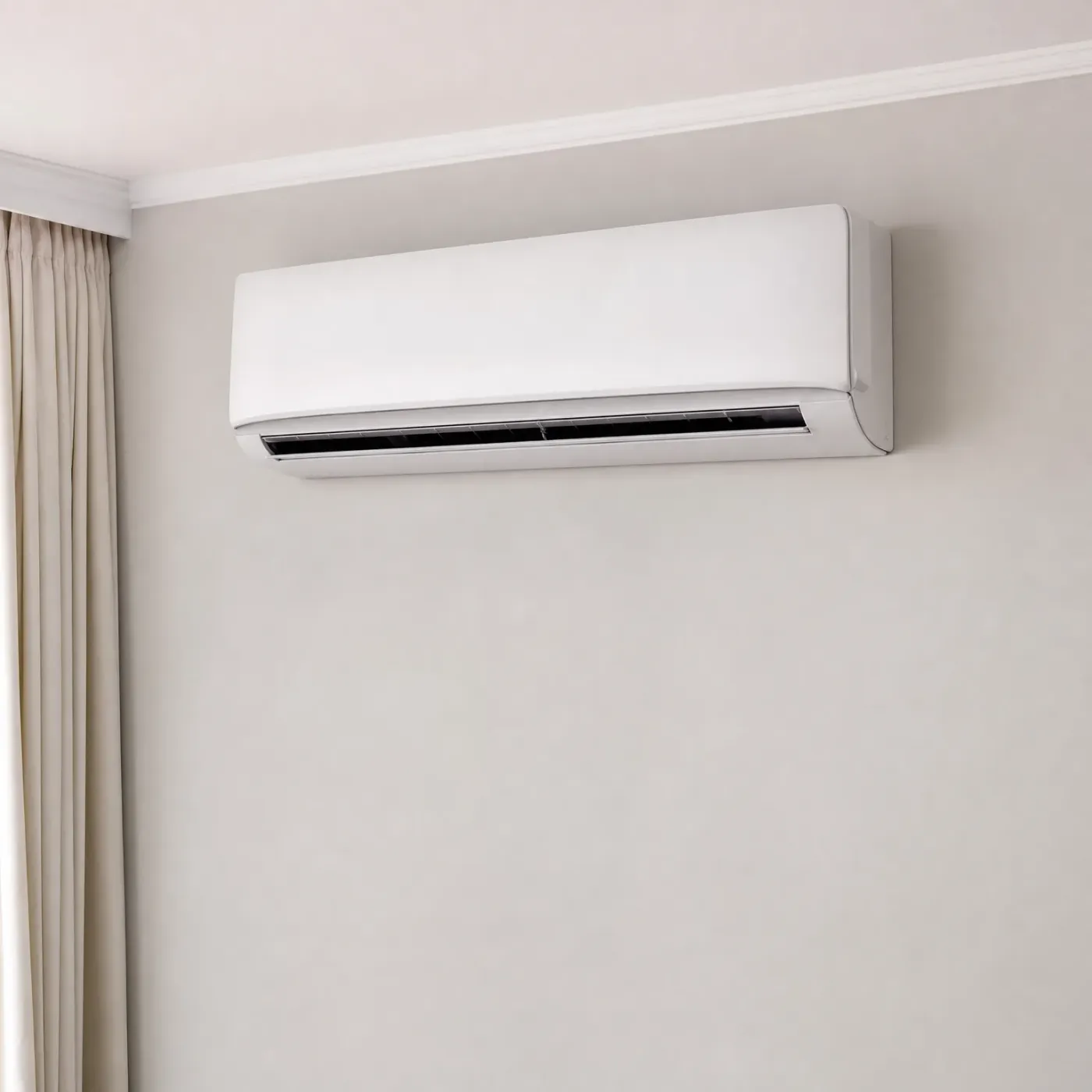
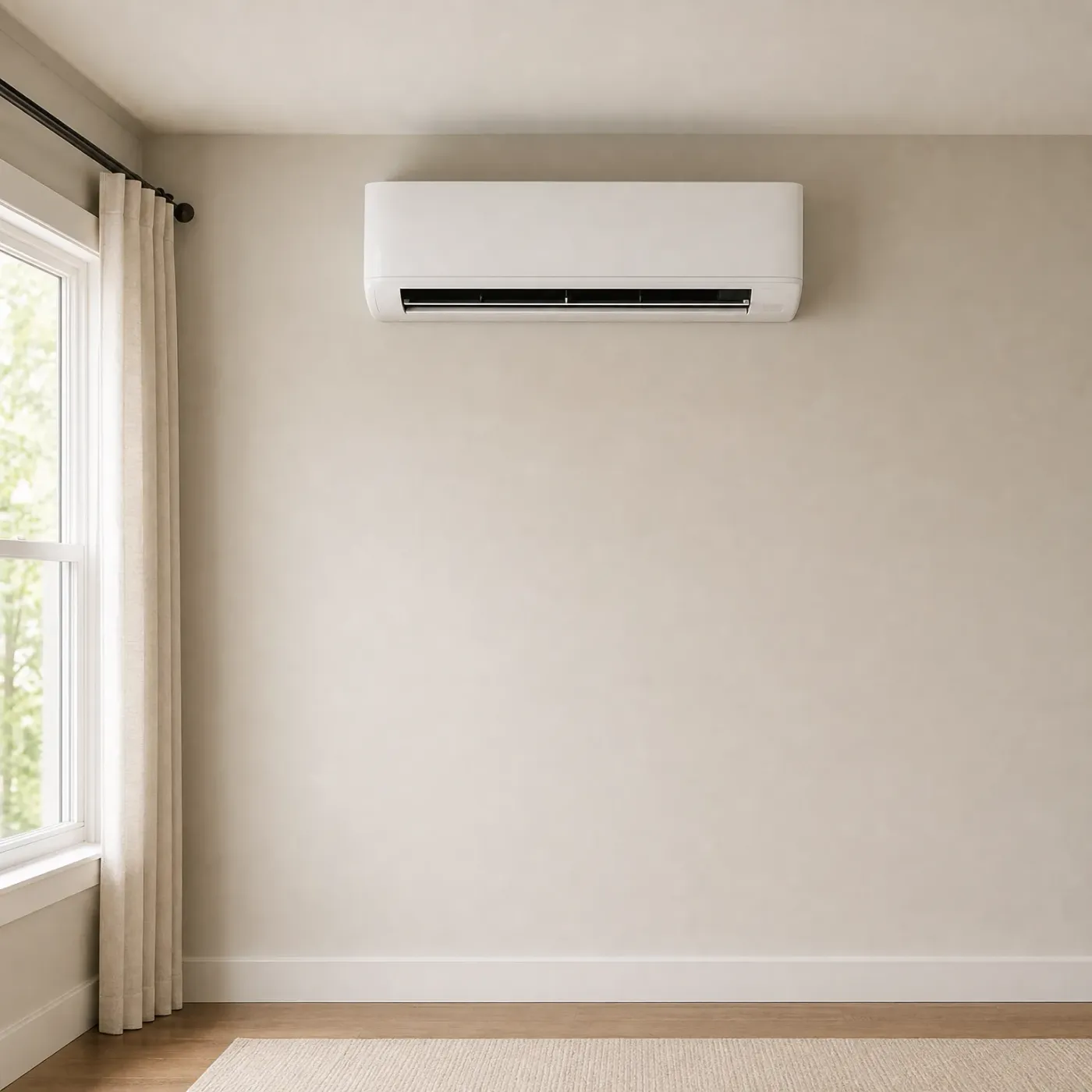
A mini split like this one gets used all year in West Virginia, cooling through the muggy stretch and heating the rest. Nothing cakes onto the coil, so when heat kicks on, there's no smell to burn off at all.
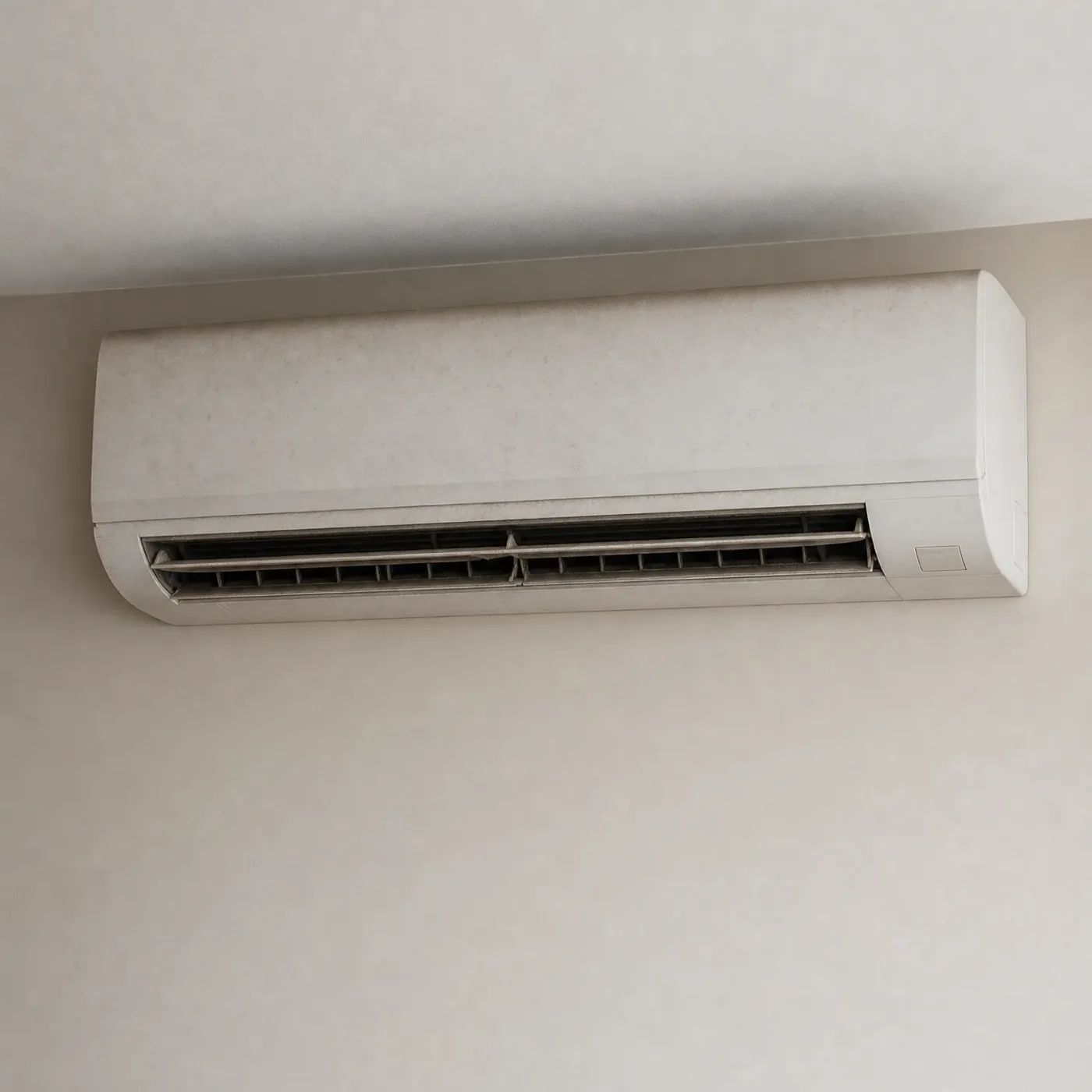
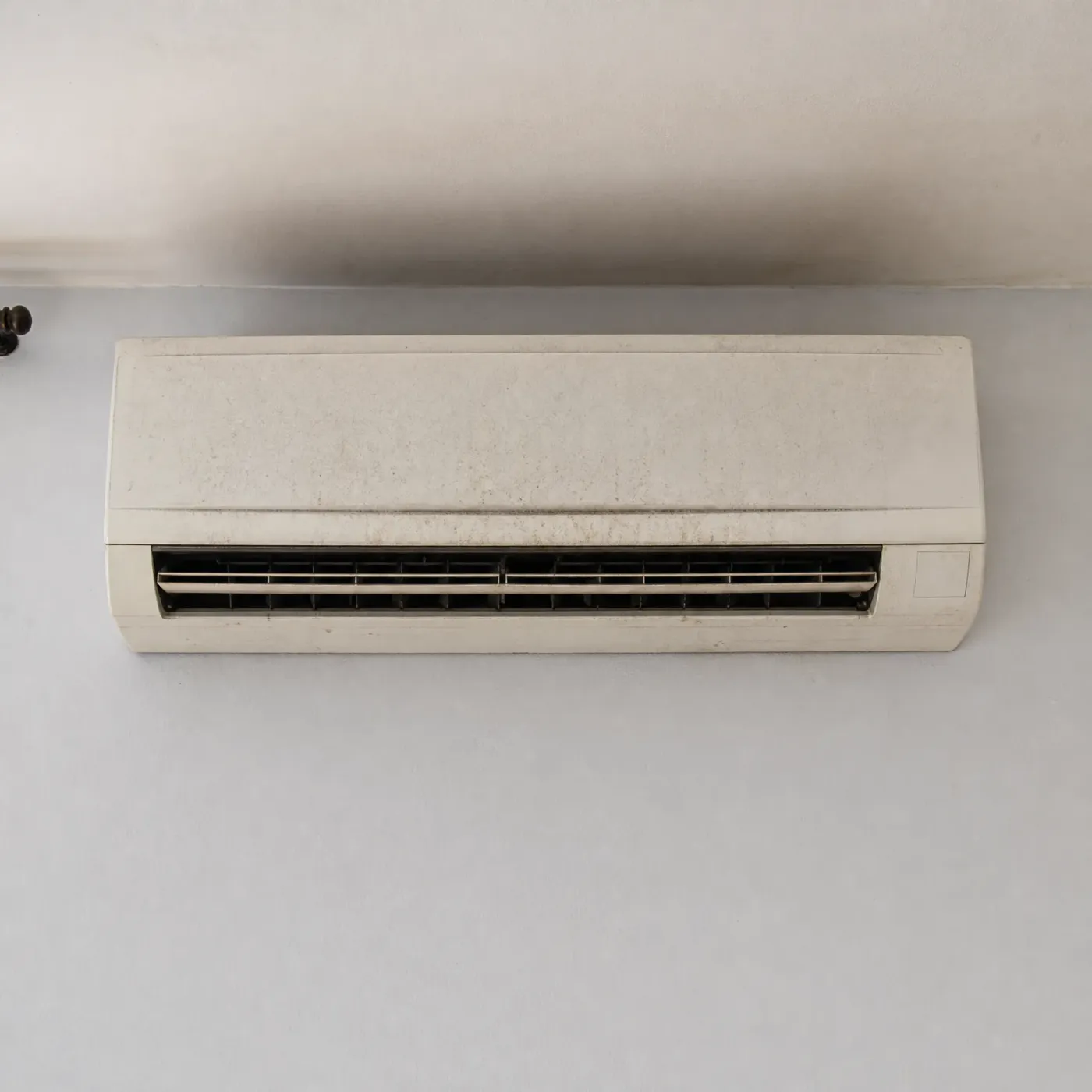
Dust and grime built up on the casing and the vents mean the coil behind them is probably just as bad. That's what keeps feeding the smell every time the heat comes on, instead of letting it burn off once and quit.



Only one pro gets your request, so you hear from one company.
A local pro who knows mini splits gets your details and gets in touch.
Asking costs nothing, and the choice to hire stays yours.
A burning or dusty smell fading after a few minutes makes sense once you know the coil is just burning off summer dust. But a musty smell is a different thing. It doesn't smell like heat, it smells like a basement or wet laundry left too long, and it usually doesn't fade the way the dust smell does. That's enough to make anyone pause before running the unit.
Dust burns off. Mold and standing water don't. A musty smell means the coil or the drain pan is holding water that didn't drain the way it should, and that water has sat long enough to grow mold. It happens most to mini splits that ran all summer cooling and pulled moisture out of the air the whole time, which is most of them in West Virginia given how sticky summers get here. If the drain line is clogged or pitched wrong, water backs up instead of draining out, and it sits against the coil or in the pan underneath it. Heat mode doesn't touch any of that. It just blows air across a coil that's already carrying the smell, and the smell doesn't go away because nothing about turning the heat on dries the pan out.

Summers here run muggy, with a dew point that averages 61°F across June, July and August, according to NOAA climate data. That's the kind of air that sticks, and it's also what loads up your mini split's coil with moisture all summer while it's cooling the house. Moisture on the coil gives dust something to cling to, and that's what you smell burning off when the system switches to heat. Drier summer air would mean less for the coil to collect, but West Virginia doesn't get that. If the dusty smell lingers past the first few minutes instead of fading, it usually means more built up on that coil than a quick burn-off can clear.
NASA POWER T2MDEW county cells weighted by homes




That's the moisture your mini split pulls out of the air all summer. Some of it sits on the coil and in the drain pan, which is what feeds a musty smell once heat kicks on.
That's how long a dust smell should take to burn off once the coil warms up. Past that, or if it's musty instead, something's holding onto moisture or grime.
You switch over to heat and something's off. Maybe it's a sharp, dusty smell for a minute or two, nothing to worry about on its own. But if it's musty, sour, almost like a wet basement, that's not dust burning off. That's moisture sitting somewhere it shouldn't, usually the drain pan or the coil itself, left over from a summer of running the AC. You might notice it strongest right when the unit kicks on, or you might catch it drifting through the room the whole time it's heating. Either way, it means something in there has stayed wet long enough to start growing mold, and that's air everyone in the house is breathing while they're trying to stay warm.
Heat kicks on and warms the indoor coil first.
Dust left over from summer cooling burns off the coil.
That burning dust is what you smell for a few minutes.
If smell lingers, air is passing over a damp or moldy coil instead.
Most homes here heat with electricity, and at 15.39 cents per kilowatt-hour, running your mini split to chase down a smell instead of fixing it adds up fast. A dirty coil or clogged drain pan makes the unit work harder to put out the same heat, so you're paying more for less comfort until it's looked at.
EIA-861 2025 statewide residential average
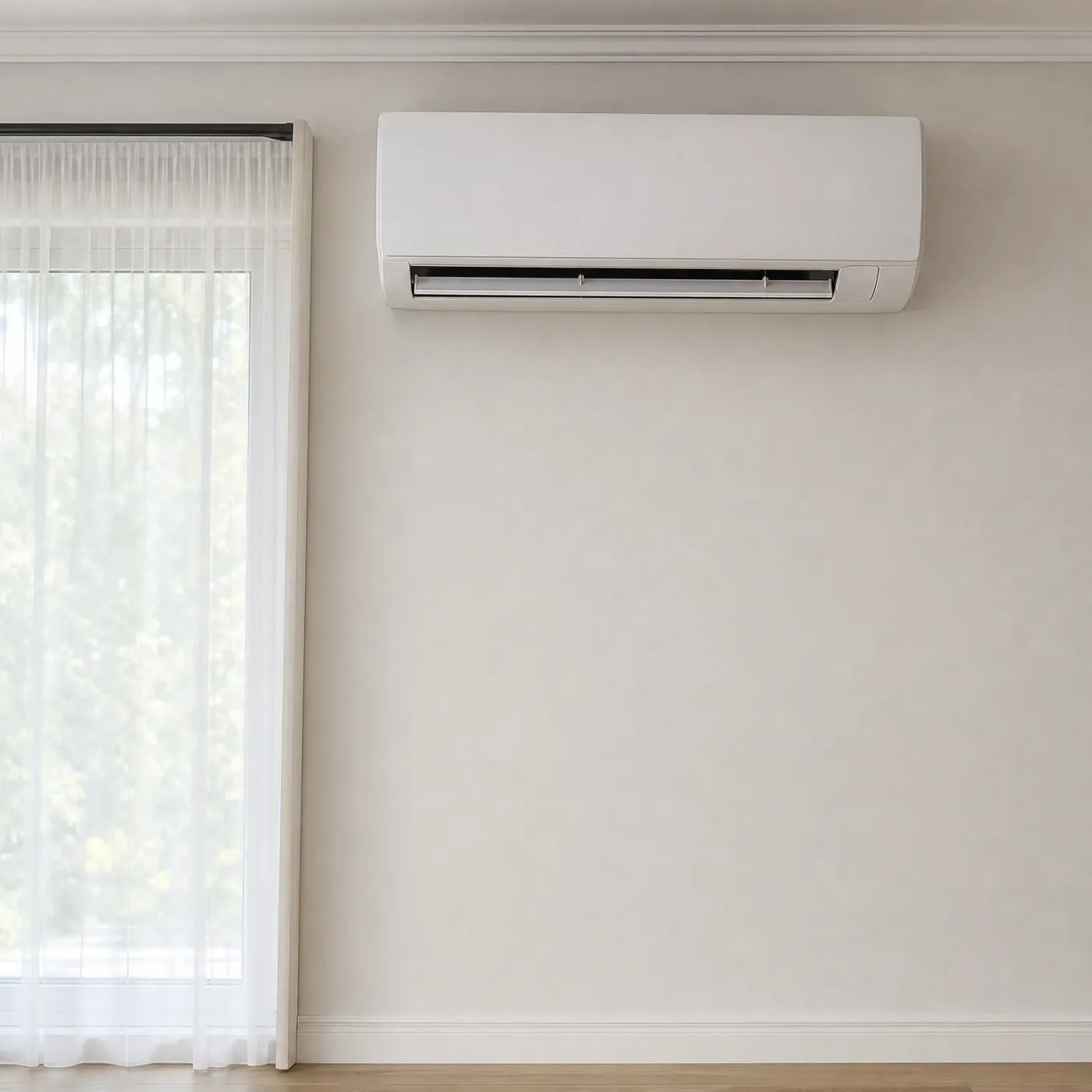
This is a mini split that got cleaned before heat season started. The coil is clear, the filter is clear, and the drain pan has nothing sitting in it. Switch it to heat and warm air comes out warm air, nothing else.
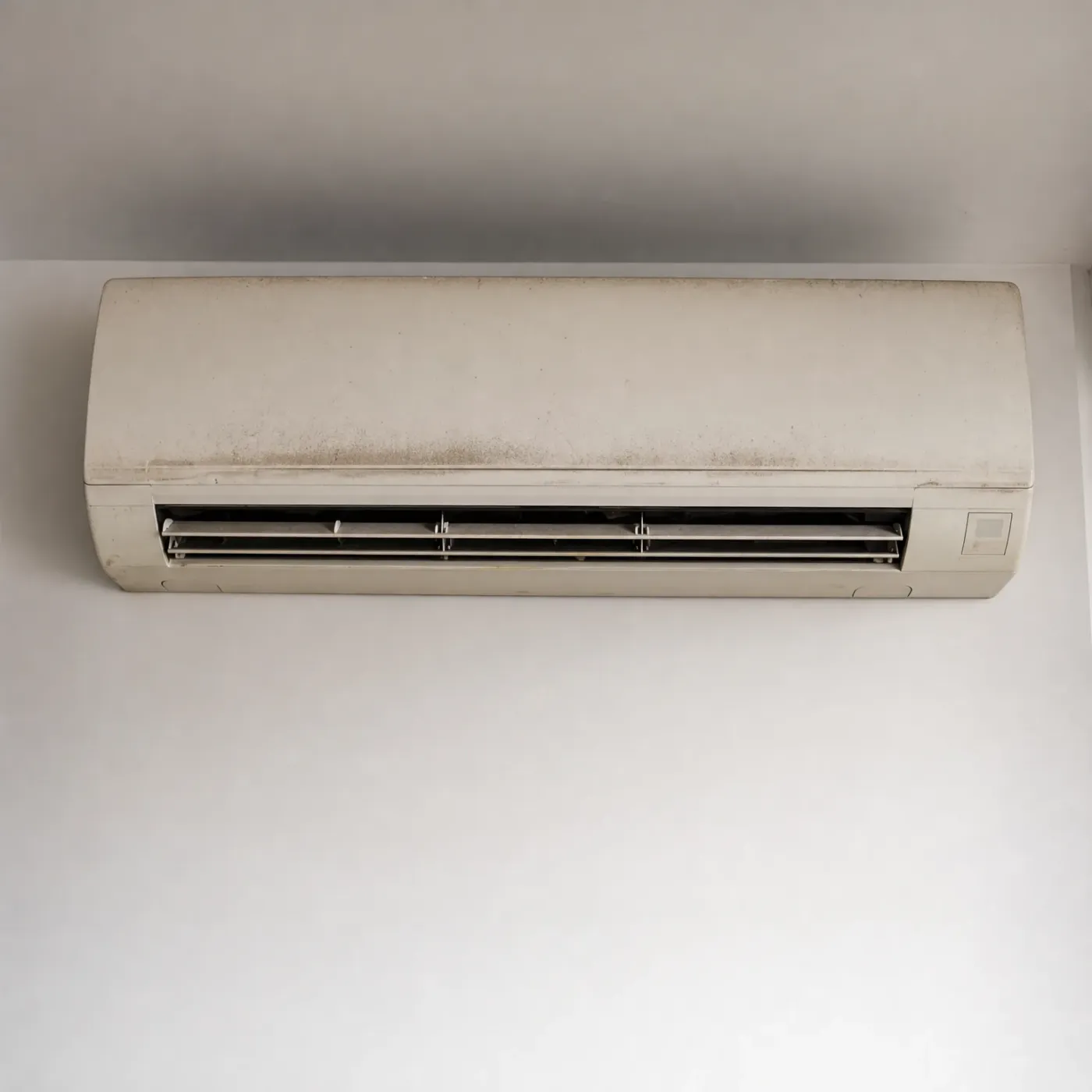
This is what feeds the musty smell. Dust and grime built up on the coil and around the vents all summer, and some of that moisture never fully drained. Heat pushes air straight through that buildup and into the room with it.

A burning smell for the first few minutes of heat is dust burning off the coil. A musty smell that hangs around means moisture sitting on that coil or in the drain pan, left over from a summer of cooling this place through the muggy months. One clears up by itself. The other doesn't, and running the unit through it just keeps blowing that smell through the room while it costs more to heat on top of it.
If it's the second kind, you don't have to figure out which part is holding the moisture or how bad the buildup is before you call someone. A contractor local to West Virginia who works on mini splits all year, through the cooling months and into heating, has seen this exact smell plenty of times and knows where to look first. Get matched with one and they'll reach out to you directly, so you're dealing with one person who already knows the equipment, not a string of calls to sort through.

Matched to your mini split job