




What size mini split a West Virginia home needs

Get in touch with a local installer about a new mini split.

Get my match

What size mini split do I need for my West Virginia home?

You want to know what size mini split will actually heat and cool your home without guessing. Sizing comes down to your square footage, your ceiling height, how many windows let in sun, and how well your walls and attic hold heat. Get it wrong and the unit either can't keep up on the hottest or coldest day, or it short cycles and leaves rooms feeling damp and uneven.

Most homes need about 20 BTUs per square foot, but your layout decides the exact number

A single room of 300 to 400 square feet usually calls for a 9,000 to 12,000 BTU unit. A larger open space, or a whole small home, can need 18,000 BTU or more, sometimes split across multiple zones. West Virginia summers get sticky, so the unit also has to pull humidity out of the air, not just drop the temperature. Since most homes here heat with electricity, the same mini split likely carries your winter heat too, which means it has to be sized for the cold snaps, not just the muggy stretch. A contractor who measures the room, checks insulation and counts windows will land on the right number. Guessing from square footage alone leaves you either cold in January or clammy in July.

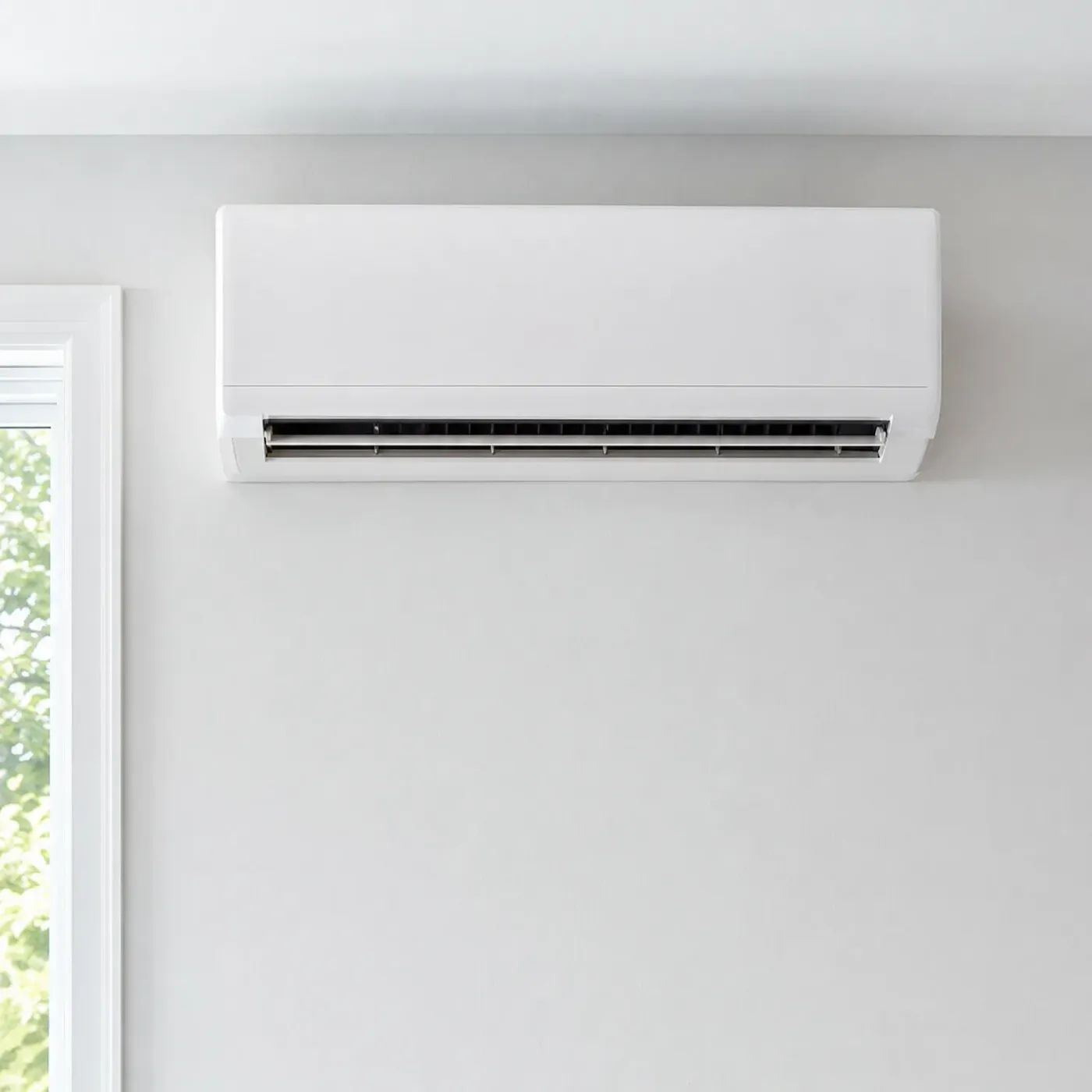
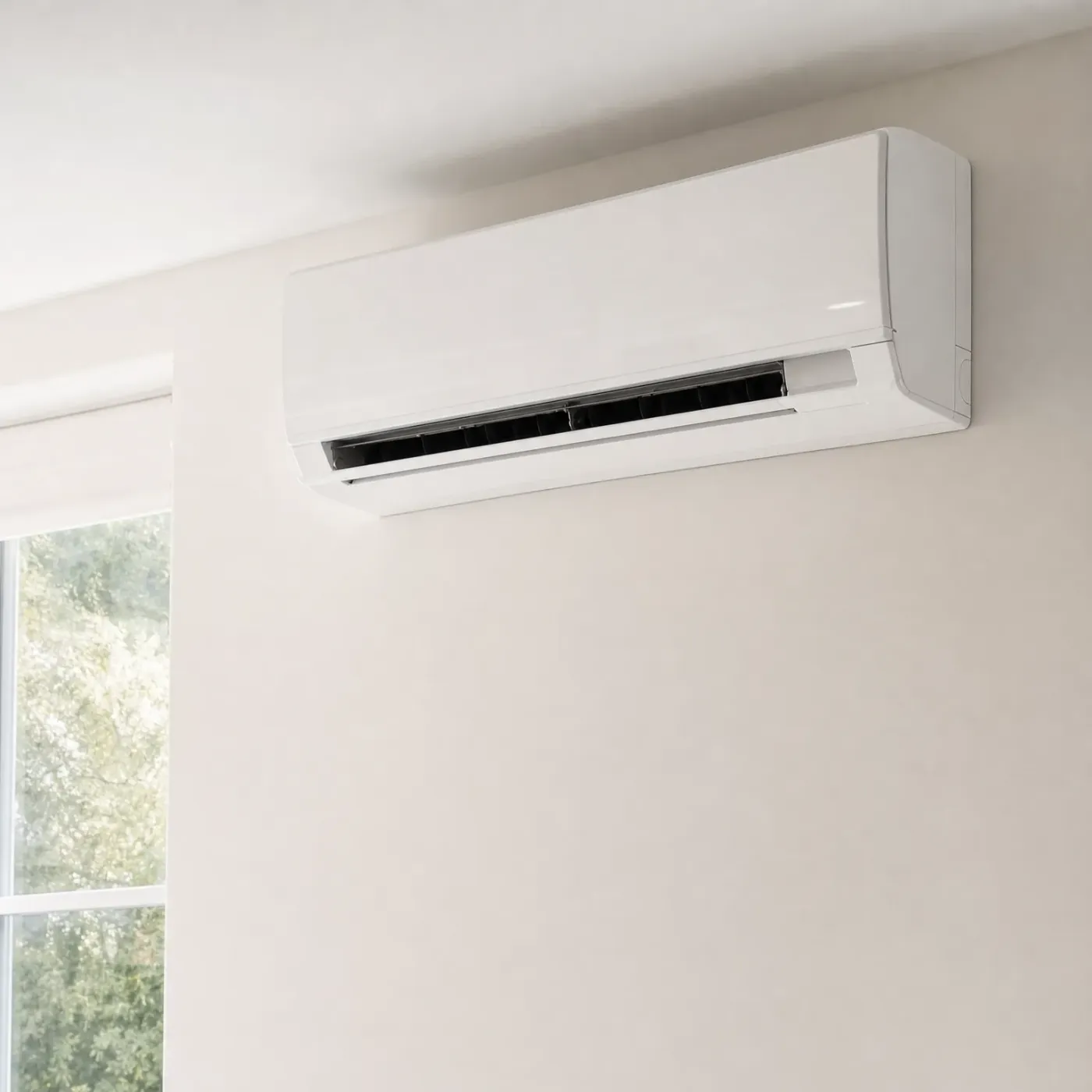
A white wall-mounted mini-split air conditioner installed near the ceiling on a plain beige interior wall.
Sized right, the unit holds a steady temperature and the compressor cycles on and off instead of running flat out.
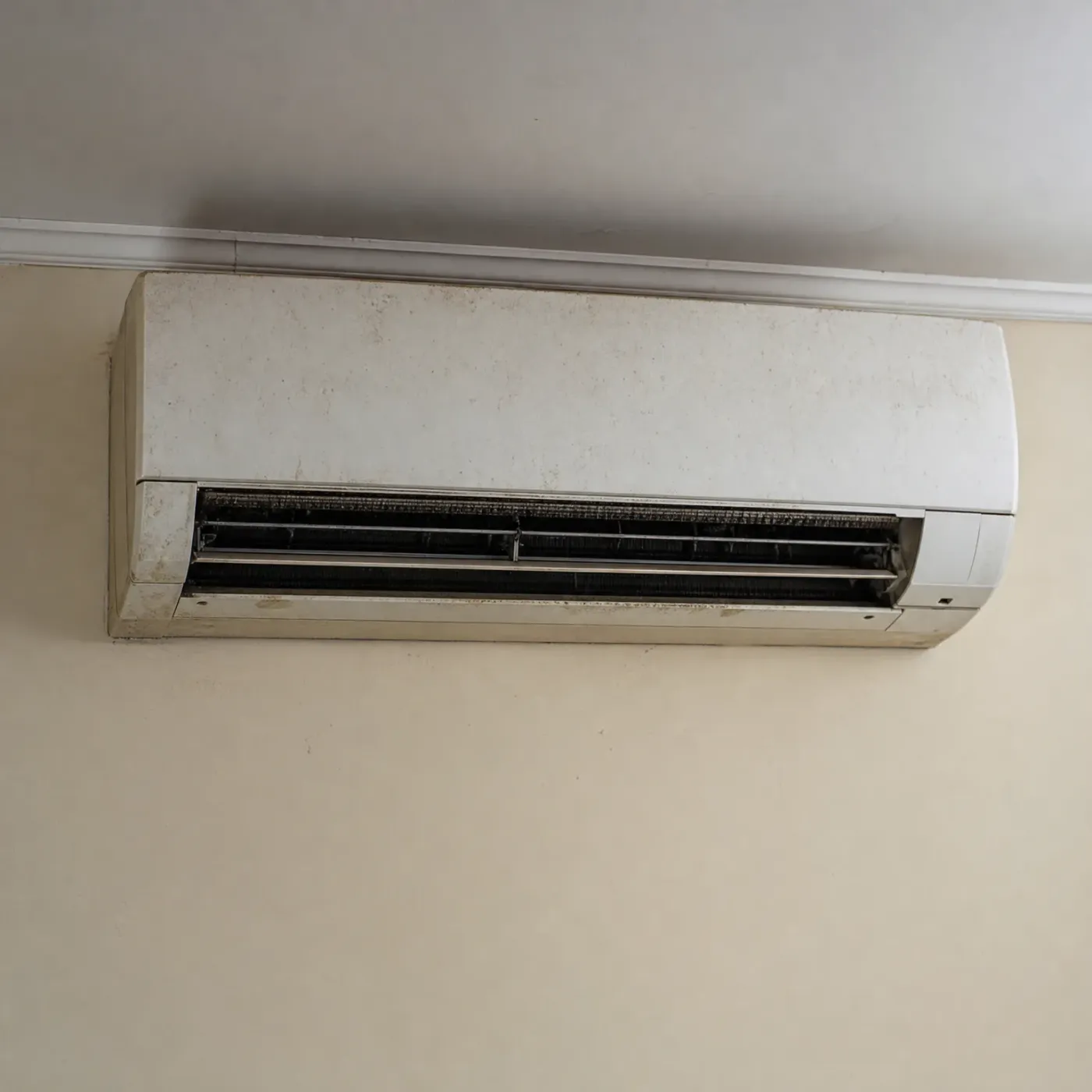
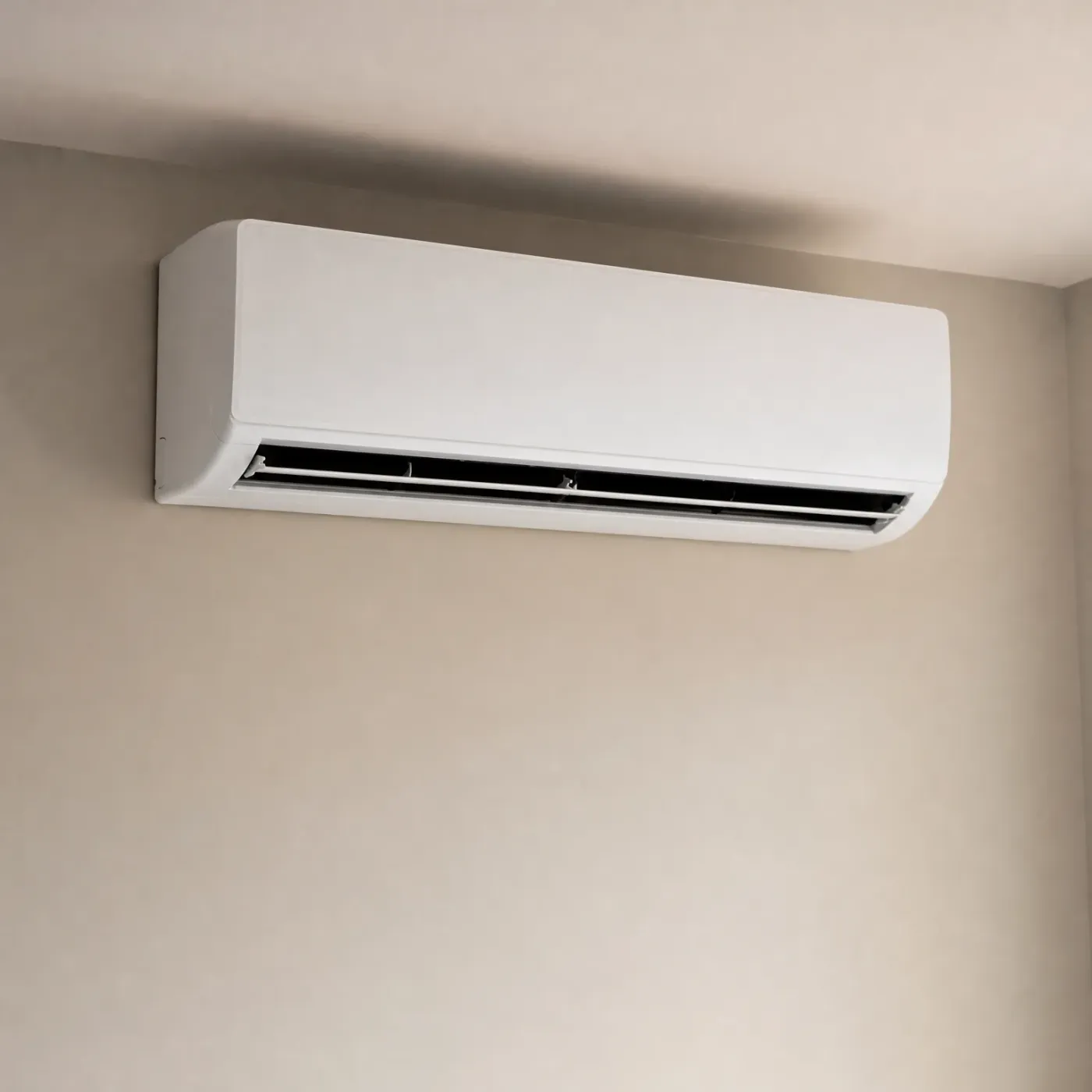
A dusty, discolored wall-mounted mini-split air conditioner unit near the ceiling of a plain beige interior wall.
A unit that's too small never catches up on the coldest days, and one that's too big cycles so fast it leaves the air damp and uneven.
A woman with long blonde hair in a light blue shirt leans back on a beige sofa with her eyes closed, in a softly lit living room with cushions and a blurred plant and shelf in the background.
A woman with long dark hair in a gray knit sweater sits on a gray sofa with a cushion, looking toward a window in a living room with framed pictures and a lamp in the background.
A woman with long dark hair in a light grey knit sweater sits on a sofa indoors, looking to her right, with a framed landscape picture, a potted plant and a curtained window behind her.
A woman with long dark hair leans back against a gray sofa with her eyes closed, in a living room with a curtained window, a potted plant, and a dark screen in the background.

Is your mini split keeping up with the house?

Walk through your rooms and pay attention to what you feel. A unit that's undersized leaves the room by the windows warmer than the rest of the house come August, and in January you'll notice the thermostat says one thing while you're reaching for a sweater. If it's oversized, the air feels clammy even when the temperature looks right, because the unit cools the room fast and shuts off before it pulls the moisture out. Listen for short cycling too, the compressor kicking on and off every few minutes instead of running steady. Left alone, a system that's working against its size wears down faster and leaves the people in those rooms uncomfortable through the months you depend on it most.

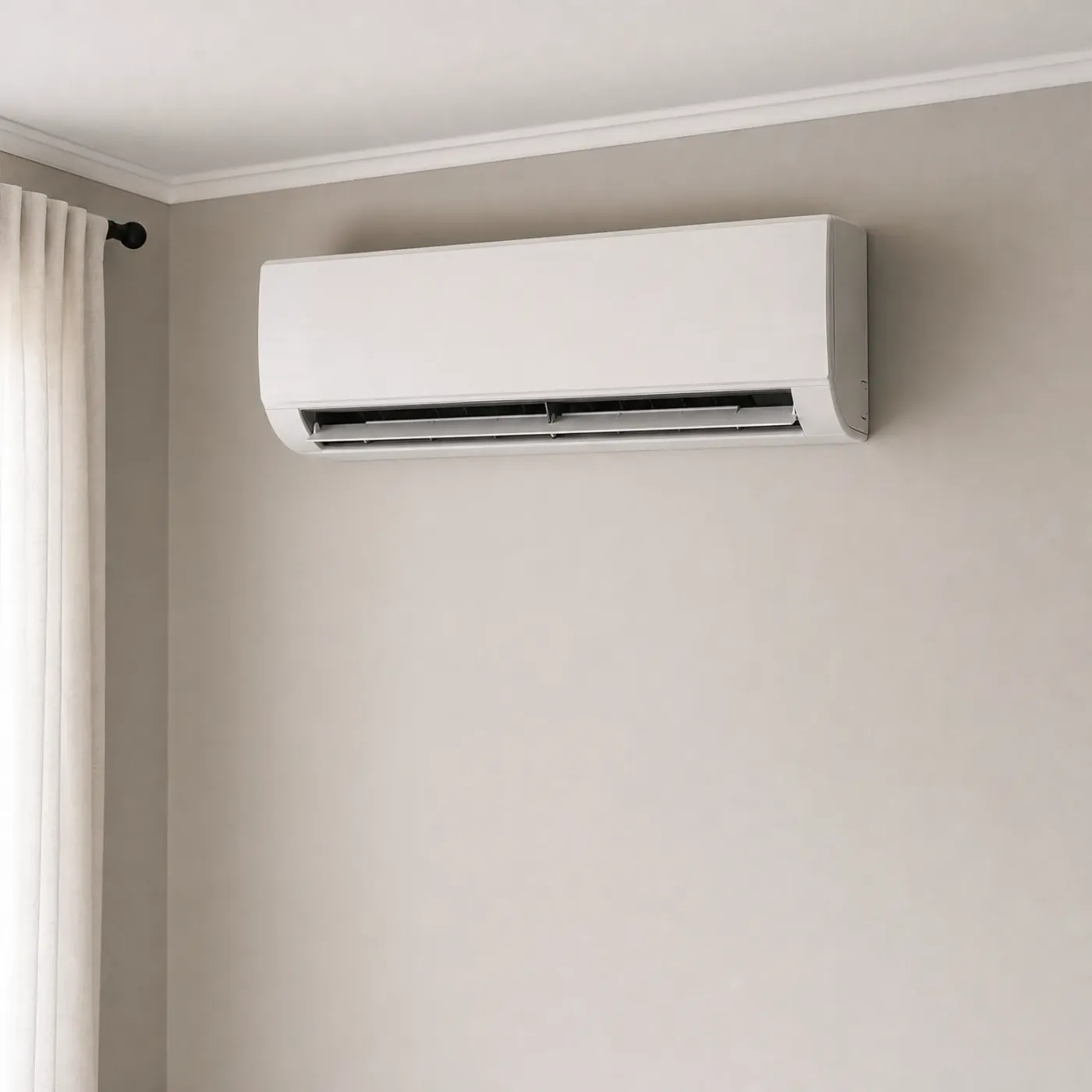
A white wall-mounted mini-split air conditioner installed high on a beige interior wall near the ceiling molding, with a light curtain and curtain rod at the left edge.

Running the way it should

A unit sized right for the room cycles on and off and keeps the corner by the window as comfortable as the rest. You're not adjusting the thermostat every hour or checking on the kids' rooms to see if they're too warm or too cold.
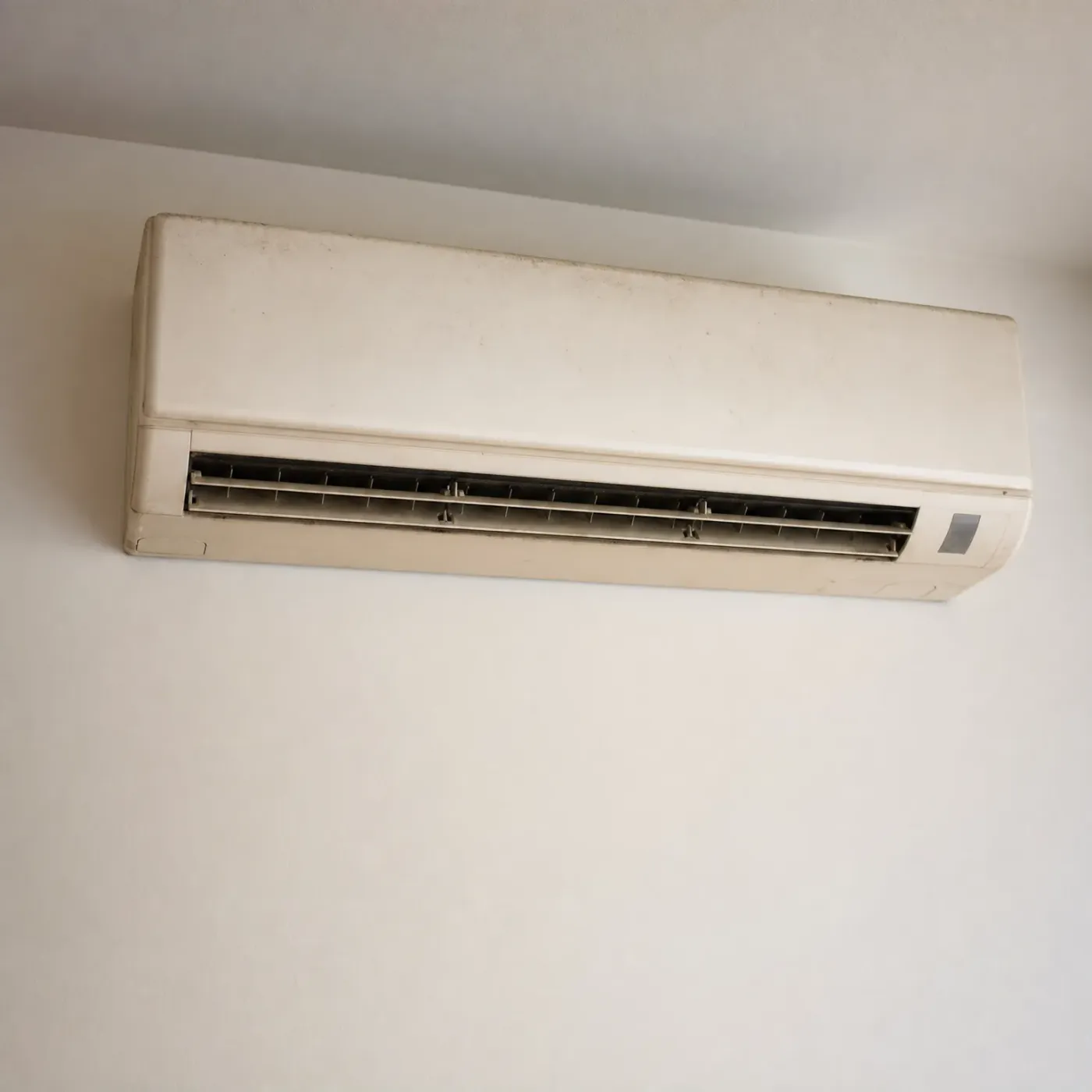

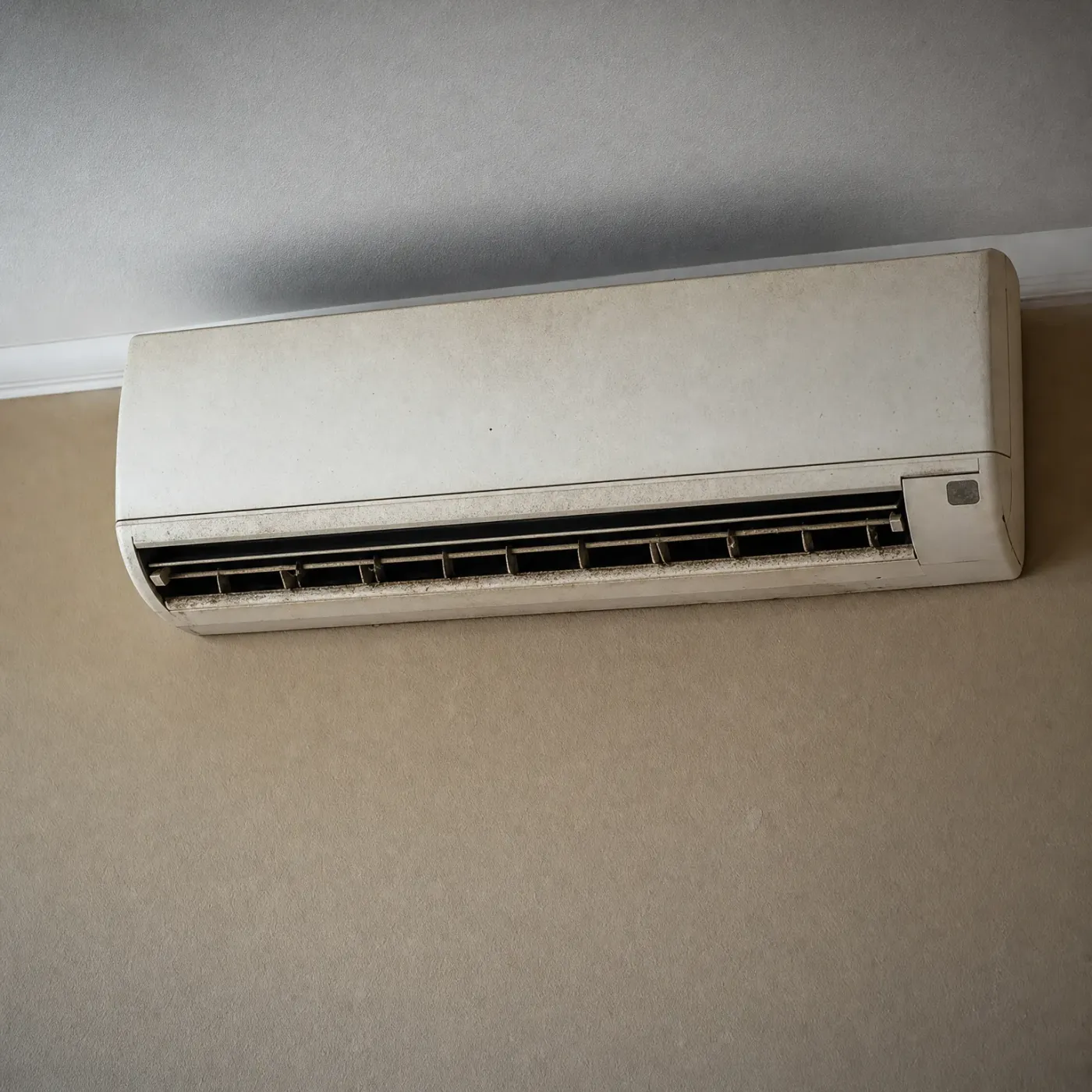
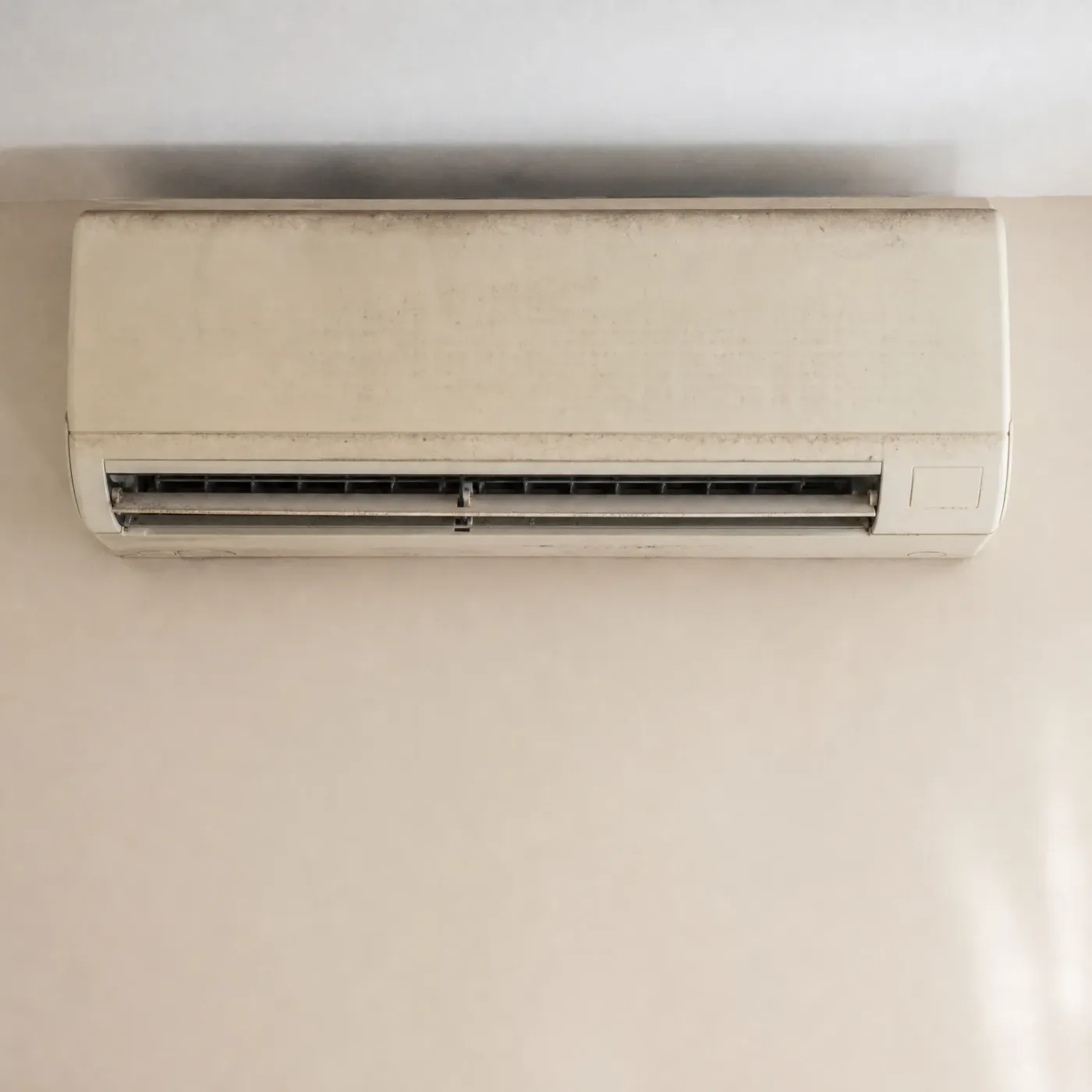
A wall-mounted mini-split air conditioner indoor unit with a discolored cream plastic casing and dusty outlet vanes, installed high on a plain light-colored interior wall near the ceiling.

Running too hard for too long

Yellowing and dust on the casing usually mean the unit has been running long and hard for years. If it's also undersized for the room, it never gets ahead of the heat in July or the cold in January, and everyone in the house feels it.

A woman stands in the open black front door of a white-sided house with a dark shingled roof while a man in a navy jacket approaches along the walkway, with lantern wall lights, a potted shrub, and flowering garden beds nearby.

How a contractor actually sizes the unit

A contractor doesn't start with the size of the room. They run a load calculation, room by room, that weighs your square footage against your ceiling height, how many windows face the afternoon sun, and how much insulation is behind the walls. That number comes out in BTUs, and it's the number that decides which indoor head and which outdoor compressor go on the work order. Two homes of the same square footage in the same West Virginia town can need different sized units if one has south-facing windows and the other doesn't.

Getting that calculation right matters more here because most homes in this state heat with electricity, so the mini split is carrying your heat load through the winter, not just taking the edge off summer humidity. You don't have to track down someone who does this kind of math for a living or explain your house twice to two different companies. Once you answer a few questions about your home, you're matched with a contractor suited to this kind of work, and they'll follow up with you directly.

A gray upholstered sofa with a beige cushion and knit blanket beside a curtained window, with a white mug and a book on a dark wooden table in the foreground and a lit lamp in the background.
A white wall-mounted mini-split air conditioner unit installed high on a light gray interior wall near the ceiling, with a white-framed window and green foliage visible at the left edge.

Right size, running easy

The unit sits near the window and does its job without being noticed. Air moves out of it steadily, the room by the glass stays even with the rest of the house, and nobody's adjusting a thing. In a sticky West Virginia summer, that's the unit cycling on and off instead of straining.

A dusty white wall-mounted mini-split air conditioner installed high on a beige interior wall below a molded ceiling trim.

Wrong size, falling behind

Dust and grime build up on the casing, and the filter behind that open panel tells the rest of the story. A unit working harder than it should to cover a room gets dirtier faster and still can't hold the temperature. Wrong-sized or neglected, the result looks the same: a room that never feels right.

A smiling older woman with gray shoulder-length hair in a cream cable-knit turtleneck sweater stands behind a wooden board holding a round loaf of bread, in a warmly lit kitchen with a dark window and shelves behind her.
A woman with her hair in a bun sits wrapped in a beige knitted blanket on a couch, holding a sleeping child against her chest in a warmly lit room with a lamp and houseplant in the background.
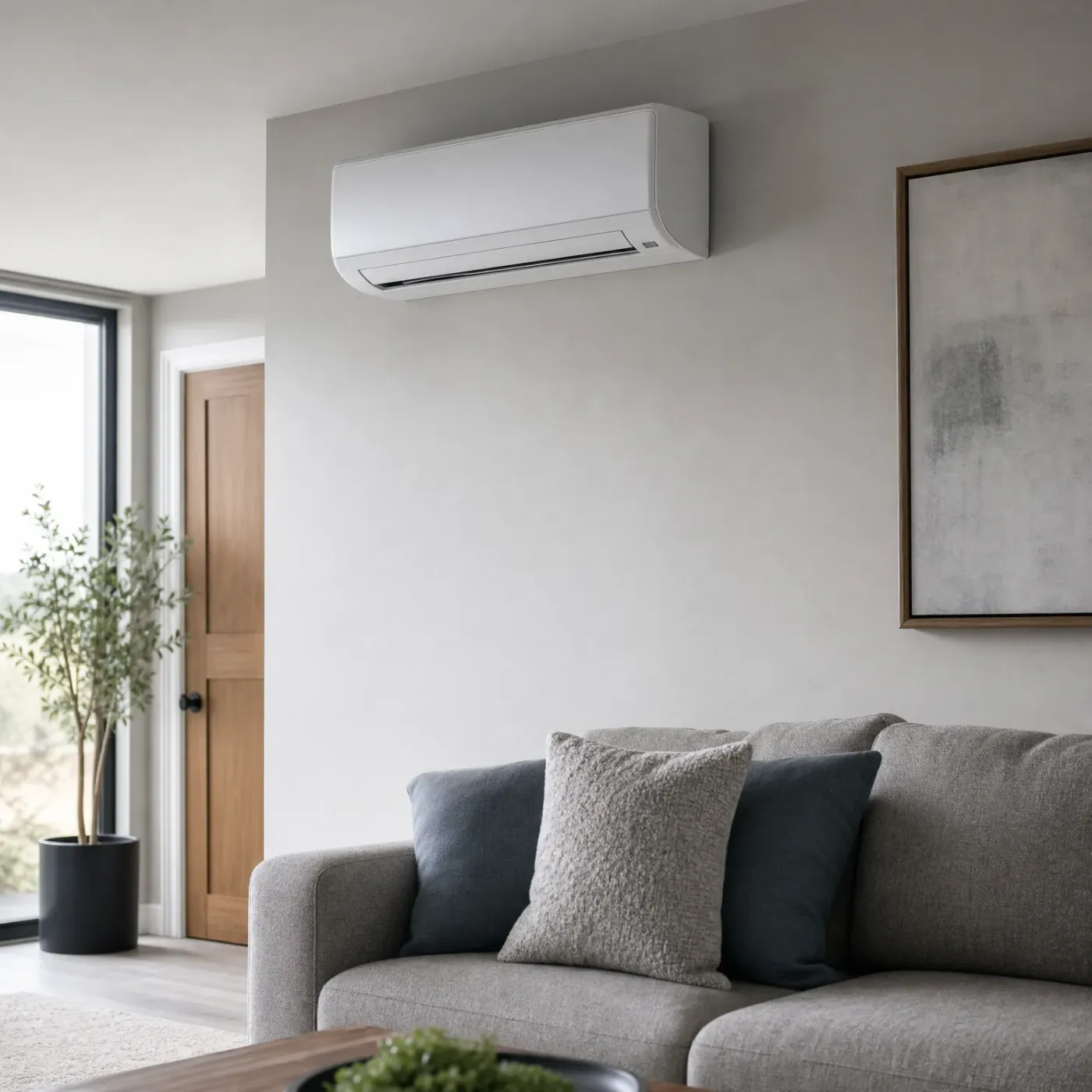
A white wall-mounted mini-split air conditioner on a light gray wall above a gray sofa with cushions, with a framed abstract artwork at right, a wooden door and potted plant at left.

Get your mini split to the right pro

Skip collecting and comparing quotes for the new mini split.

A local installer who puts in mini splits gets your project.

Request a pro

You only hire the pro if you want to.

One Zone or Several

One zone

  • A single indoor head works when you're sizing for one room, like a sunroom addition or a finished space over the garage that your main system doesn't reach well.
  • Installation is simpler: one line set, one indoor unit, one outdoor condenser, which usually means less wall and less wiring to deal with.
  • If that room's needs change, you can't add comfort anywhere else in the house without a separate project later on.
  • Load calculation only has to account for that one room's square footage, windows, and ceiling height, so sizing tends to be more straightforward.
  • Heating that room through a West Virginia winter falls entirely on that one head, so it needs to be sized for the coldest days, not just the muggy ones.

Multi-zone

  • A multi-zone system ties several indoor heads to one outdoor condenser, so you can size each room separately instead of treating the whole house as one load.
  • This fits a home where you're trying to keep every bedroom comfortable at once, not just one problem room.
  • Each zone runs on its own thermostat, so a west-facing room that bakes in the afternoon sun doesn't force the whole house colder to compensate.
  • The outdoor condenser has to be sized for the combined load of every zone running at once, which makes the room-by-room load calculation matter even more.
  • More indoor heads means more line sets and more holes through the wall, so the installation itself takes more planning than a single zone.
  • If one zone needs servicing, the rest of the house can usually keep running on its own thermostats.
A dusty white wall-mounted mini-split air conditioner indoor unit installed high on a beige interior wall below a white ceiling and trim.
Before you get your mini split installation
A white wall-mounted mini-split air conditioner installed near the ceiling on a light-colored interior wall, with a window and green foliage visible at the left edge.
After you get your mini split installation

Power costs 15.39 cents per kilowatt-hour statewide

At 15.39 cents per kilowatt-hour, running an oversized mini split costs you more every time it cycles on, and an undersized one runs almost constantly trying to catch up. Getting the size right the first time keeps that rate from working against you.

EIA-861 2025 statewide residential average

The right size for your mini split comes from a load calculation, not a square footage chart taped to a showroom wall. Get that number right and the unit holds your home steady through a sticky West Virginia summer and through the months you're running it for heat, without short-cycling or running flat out. Getting there on your own means finding contractors who actually do room by room load calculations instead of guessing off square footage, calling around to compare how each one prices the job, and explaining your home's windows and layout over and over to each one. A contractor who sizes it properly does that work once, walks your rooms, and tells you straight what your home needs. Matching with one means you skip the searching and the repeat explaining and get someone who already knows what questions to ask before they show up.

A modern two-story house with dark siding and stone base at dusk, with lit soffit lights, a path of large rectangular pavers set in dark gravel, planting beds, a lawn, and an orange and blue sunset sky above distant trees and water.

Mini Split Installation

The right pro for this job

Step 1 of 3: Equipment
  • A cream chunky cable-knit throw draped over a beige upholstered armchair beside a bright window, with a wooden side table holding a book and a vase of leafy branches at left.
    • Say what's going on with your mini split, and a pro who works on them reaches out.
    • A local pro who knows mini splits gets your details and gets in touch.
  • Living room corner with a gray sofa holding beige pillows and a knit throw, a round wooden coffee table with a dark planter and shallow bowl, a jute rug, a floor lamp, a framed landscape print on the wall, and a window showing trees.
    • Send the form and stop researching installers for the new mini split.
    • One request ends the search for a mini split installer.
  • A living room corner with a cream sofa and cushion, knit throw, wooden coffee table holding a shallow bowl and dark ceramic vase with green foliage, a floor lamp, potted plant in a woven basket, and linen curtains at a window.
    • Skip searching for a mini split pro and answer a few questions instead.
    • One form replaces the calls you'd make to find a mini split pro.
  • A round reclaimed-wood coffee table with a black metal base sits on a woven rug in front of a cream sofa with cushions, with a lit built-in fireplace and a tall indoor tree in the background.
    • One installer gets your project, so there's no bidding war over it.
    • Only one pro gets your request, so you hear from one company.